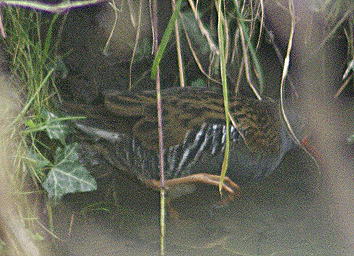
In winter, we share our mill stream with a small water bird in frilly knickers - a
little grebe or
dabchick (
tachybaptus ruficollis) - a
grèbe castagneux. It was in its winter uniform of shades of grey, but still with a fluffy white behind. The fishing technique of this smallest of the grebes in fast flowing water seems to be to allow itself to be carried by the current from one promising spot to another, under the water much of the time. We watched it from the bedroom window as it caught a fish about 5cm long (a couple of inches in old money). This tiddler seemed to give the bird a little trouble to work it round to a head-first orientation for ease of swallowing. The grebe was last seen departing under the bridge, backwards and bobbing like a cork. No wonder we never get any work done!
Only three
cranes on 1st December. Tim says they were trying to get into V formation with a great deal of debate about who was to be leader.
I filled the seed feeder that hangs in the cherry tree yesterday, to find it completely empty today. It normally lasts a little longer than that! There was a fair bit on the ground. Several possible explanations spring to mind. Firstly, we've had some rather interesting winds that caused tiny snowdrifts
inside the barn. In Leeds, an enterprising wood pigeon used to stand under the feeder (which hung from a handrail) and bash it with its head to knock seed onto the ground for it to pick up - can't do that here! Most likely is the habit of the
great tits - of which there are at least eight - of slinging aside anything that isn't a sunflower seed, so that they feed in a little rain of millet, corn, maize etc. The great tits and
blue tits had to feed on the ground along with the
robin,
dunnock,
chaffinches and
siskins. The
goldfinches preferred the teazles on the other side of the millstream. I refilled the feeder - let's see how long this one lasts!